Introduction
Need explosion-proof signalling lights for a hazardous-area facility in the UAE or GCC? Daly Middle East supports contractors, consultants, EPC companies, control-panel builders, maintenance teams and industrial operators with audible and visual signalling options for demanding environments.
This category includes hazardous-area beacons, sounders, horns, combined audible-visual signalling devices, status lights, manual call points and pushbuttons. Signalling equipment is selected by function as well as by area classification, so confirm the exact product approval, gas or dust group, sound level, light source, colour, control method, construction and environmental limits before purchase.
For application support, visit the explosion proof lighting supplier UAE page or request technical signalling support.
What are explosion-proof signalling lights?
Explosion-proof signalling lights are audible, visual or combined devices designed and assessed for use in specified potentially explosive or hazardous locations. They can communicate an alarm, warning, process status, emergency condition or manual activation, but each function and product type has its own installation and electrical requirements.
The phrase “explosion-proof signalling” is a category description, not a complete specification. Check the equipment marking, certificate, protection concept, gas or dust group, temperature class, equipment protection level, ambient range, ingress protection and conditions of use for the exact model.
Signalling products in this category
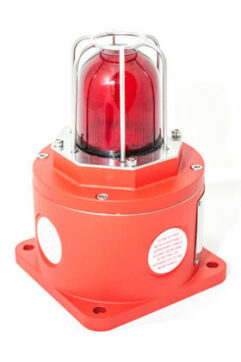
Hazardous-area beacons and warning lights
Beacons provide visual alerts using the light source, colour, flash pattern and visibility required by the application. Check the exact model’s LED or Xenon source, lens or colour options, flash pattern, voltage, mounting arrangement and approval.
Explosion-proof sounders and horns
Sounders and horns provide audible alarms for process, emergency or warning conditions. Review the published noise level, tone selection, sound pressure at the stated distance, voltage, control method, mounting and environmental limits. The category includes products published with sound levels up to 115 dB at 1 metre and models with multiple tone options, but confirm the exact datasheet before specifying.
Combined audible-visual signalling devices
Combined sounder-and-beacon units can reduce installation space where both audible and visual alerts are required. Confirm the sounder output, tones, beacon source, colour, flash pattern, wiring, control and certification for the exact combined unit.
Ex status lights
Status lights communicate an operating condition, equipment state or process indication. Check the required colour sequence, light source, visibility, control voltage, mounting position and hazardous-area approval. Published products in this category include LED or Xenon options, subject to the individual model documentation.
Manual call points and pushbuttons
Manual call points and pushbuttons allow an operator to initiate an alarm, shutdown or emergency function. Confirm the contact arrangement, reset method, activation force, enclosure construction, mounting plate, cable entries, control-system interface and complete approval for the intended location.
Where are hazardous-area signalling devices used?
- Oil and gas facilities, refineries and petrochemical plants
- Process plants, compressor stations and utility buildings
- Tank farms, loading bays and fuel-handling areas
- Offshore platforms, marine terminals and shipyards
- Chemical, pharmaceutical and manufacturing facilities
- Emergency shutdown, fire and gas or process alarm systems
- Equipment skids, control stations and classified maintenance areas
- Industrial locations requiring visual status or audible warning signals
The signalling function, alarm philosophy, control-system interface, coverage, background noise and site emergency procedure should be considered together.
How to choose explosion-proof signalling lights
1. Define the signal function
Confirm whether the device is required for an emergency alarm, process warning, equipment status, manual call, evacuation signal, shutdown command or another defined function. Avoid selecting a beacon or sounder before the alarm philosophy and control-system requirement are clear.
2. Match the hazardous-area classification
Use the approved hazardous-area drawing or project specification. Confirm whether the location is classified for gas, vapour, mist or combustible dust and whether the requirement is Zone 0, Zone 1, Zone 2, Zone 20, Zone 21 or Zone 22. A product suitable for one classified area is not automatically suitable for another.
3. Check the complete marking and certificate
Review the equipment group, category, gas or dust group, protection concept, temperature class, equipment protection level and special conditions of use. If the project specifies ATEX, IECEx, UL or another approval route, confirm that the documentation applies to the exact model and configuration.
4. Select audible and visual performance
For sounders and horns, provide the background noise, required sound pressure, distance, tone or message requirement and coverage area. For beacons and status lights, define the colour, flash pattern, visibility, viewing direction, ambient light and required operating distance.
5. Check construction and environment
Review housing material, ingress protection, corrosion exposure, salt air, dust, water, chemicals, vibration, impact, ambient temperature and cable-entry requirements. Products in the category are published with different constructions, including GRP and 316L stainless steel; select by the actual environment and datasheet.
6. Confirm electrical and control details
Provide voltage, frequency, AC/DC requirement, current, control method, relay or PLC interface, wiring, cable entries, reset arrangement and any cause-and-effect documentation. These details help prevent late changes during panel integration or installation.
7. Verify maintenance and testing
Confirm access, inspection, cleaning, alarm testing, spare parts, reset procedure and replacement requirements. Signalling devices are part of a safety or control function, so the inspection and test arrangement should be included in the project review.
ATEX and IECEx signalling equipment
ATEX and IECEx are related but different certification systems. ATEX is the European Union legal framework for equipment and protective systems intended for potentially explosive atmospheres. IECEx is an international conformity-assessment scheme for equipment and services used in explosive atmospheres.
Some signalling products may carry more than one approval route, but this must be verified for the exact model and configuration. For a UAE or GCC project, check the client, consultant, authority and destination-market requirements before finalising the equipment.
Read the official IECEx FAQ, the European Commission ATEX guidance and Daly’s ATEX vs IECEx buyer guide.
Signalling-light quotation checklist
Before requesting a quotation, send:
- Project location, industry and signal function
- Gas or dust zone and area-classification drawing
- Gas/dust group, temperature class and required approval route
- Device type: beacon, sounder, horn, combined unit, status light, call point or pushbutton
- Required colour, flash pattern, tone, sound level, message or visibility range
- Background noise, coverage area and alarm or cause-and-effect requirements
- Voltage, frequency, control method, PLC/relay interface and cable entries
- Housing, IP, corrosion, dust, moisture, vibration and temperature requirements
- Mounting position, access, testing, reset and maintenance requirements
- Datasheet, certificate, wiring details and quotation requirements
If any item is unknown, provide the project specification, alarm philosophy, cause-and-effect matrix or hazardous-area drawing for review. Daly Middle East can then coordinate a reviewable shortlist against the application.
Daly Middle East technical support
Daly Middle East supports UAE and GCC enquiries for hazardous-area signalling with product-family guidance, technical information and quotation coordination. Depending on the project, the review may cover the zone, gas or dust group, temperature class, signal function, sound level, tone, colour, light source, construction, mounting, electrical interface, datasheets and certification references.
The objective is a technically reviewable signalling shortlist that fits the project inputs—not an unsupported claim that every product is suitable for every alarm function or hazardous area.
Request an explosion-proof signalling quotation or contact Daly Middle East.
Explosion-proof signalling lights FAQs
What are explosion-proof signalling lights?
They are audible, visual or combined signalling devices intended for specified potentially explosive or hazardous locations. The exact product must match the function, area classification, complete marking, certificate, electrical system and environment.
What is the difference between a beacon and a sounder?
A beacon provides a visual warning or status indication, while a sounder or horn provides an audible signal. A combined unit may provide both, but confirm the exact output, control, wiring and approval for the selected model.
How loud should an explosion-proof sounder be?
The required sound level depends on background noise, distance, coverage and the alarm philosophy. Use the project requirement and the manufacturer’s stated measurement conditions; do not select only by the largest published dB number.
Can a hazardous-area beacon be used for an emergency alarm?
Only when the exact device, colour, flash pattern, visibility, control system, approval and project emergency requirements support that use. Confirm the alarm philosophy and authority requirements before selection.
What information should I send for a signalling quotation?
Send the signal function, area classification, gas or dust group, temperature class, device type, sound or visual requirements, voltage, control interface, mounting, environmental conditions and any available cause-and-effect or specification documents.
Does Daly Middle East supply explosion-proof signalling products in the UAE and GCC?
Daly Middle East supports UAE and GCC enquiries for hazardous-area beacons, sounders, horns, status lights, manual call points and pushbuttons. Product suitability, approval, documentation and availability are reviewed model by model against the project requirement.




 Combinations of Sounders and Beacons for Reliable Signalling3 products
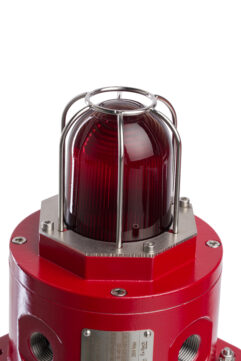 Durable Beacons for Effective Signalling3 products
 Manual Call Points for Fire Safety3 products
 Push Buttons for Efficient Signalling Solutions3 products
 Sounder Horns for Signalling2 products
 Status Lights and Signalling Solutions2 products