



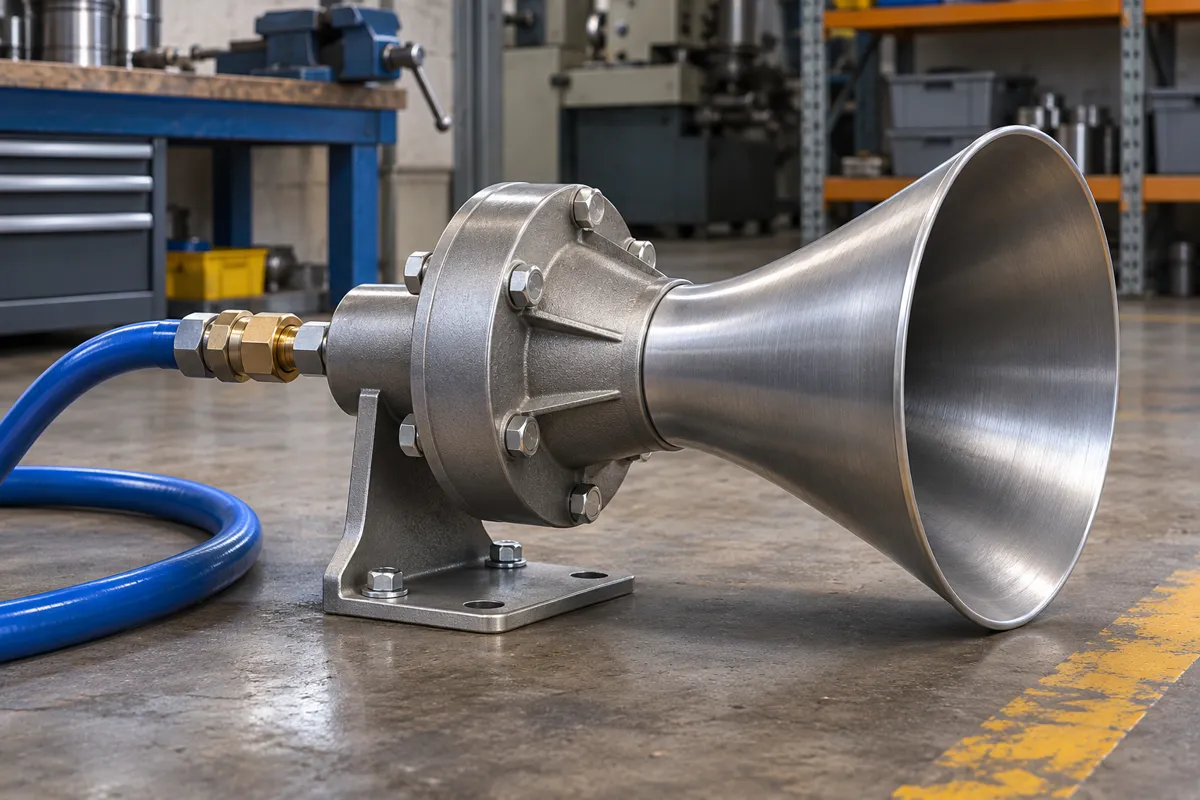
A venturi air blower moves large volumes of air using only compressed air. Compressed air is forced through a nozzle inside the body of the blower. That jet drags surrounding air along with it, so the unit pushes or pulls many times more air than the compressed air you put in. There is no motor, no gearbox and nothing to spark.
How a Venturi Air Mover Works
The principle is the venturi effect. When a fast jet of air passes through a narrow passage, pressure drops around it and draws more air into the stream. The blower body channels that mixed flow out of the outlet. Fit a flexible duct on the inlet to extract, or on the outlet to supply fresh air.
Where Venturi Air Blowers Are Used
- Confined space ventilation for tanks, vessels, manholes and pits.
- Fume and vapour extraction during welding, painting or cleaning.
- Cooling and drying of enclosed work areas and equipment.
- Tank cleaning and shutdowns in oil, gas and petrochemical plants.
Venturi Blower vs Electric Fan
| Point | Venturi air blower | Electric explosion-proof fan |
|---|---|---|
| Power | Compressed air | Electricity |
| Moving parts | None | Motor and impeller |
| Ignition source | No electrical source | Needs ATEX or IECEx certified motor |
| Noise | Often higher | Often lower |
| Air supply needed | Yes, plant air or compressor | No |
How to Size a Venturi Air Blower
- Target airflow. Work out the air changes needed for the space.
- Compressed air. Confirm the pressure and flow your compressor or plant air can supply.
- Ducting. Count length and bends. Each one cuts airflow.
- Environment. Check the materials suit the atmosphere, and any noise limit.
Venturi Air Movers from Daly Middle East
See the Venturi Air Mover and the wider range of portable ventilation systems. For tank and confined space work, read our confined space ventilation guide, and check the zone first with our ATEX zones guide. Contact us with your airflow, air supply and duct details for sizing help.
Venturi Air Blower: Frequently Asked Questions
What is a venturi air blower?
A venturi air blower, also called a venturi air mover, uses a jet of compressed air to pull a much larger volume of surrounding air through a tube. It has no motor and no moving parts.
Why use a venturi air mover in hazardous areas?
Because it is driven by compressed air and has no electric motor, it has no electrical ignition source. That makes it a common choice for ventilating tanks, vessels and confined spaces where flammable vapours may be present. Always check the certification and materials against your zone and gas.
How do I size a venturi air blower?
Start with the airflow you need in cubic metres per hour, then check the compressed air supply pressure and volume available, the length and diameter of any ducting, and the number of bends. Long ducts and bends reduce airflow.
Are venturi blowers noisy?
They can be louder than electric fans because of the compressed air jet. Silenced models and hearing protection are common on site.
What is the difference between a venturi blower and an electric fan?
An electric fan needs power and, in a hazardous area, an ATEX or IECEx certified motor. A venturi blower needs compressed air instead. Use whichever suits the air supply, noise limits and certification on site.