



ATEX & IECEx Hazardous-Area Lighting: Technical FAQ
Zones, gas groups, temperature classes, protection concepts and certificate checks - answered for the engineers who have to get the specification right the first time.
Certification schemes referenced
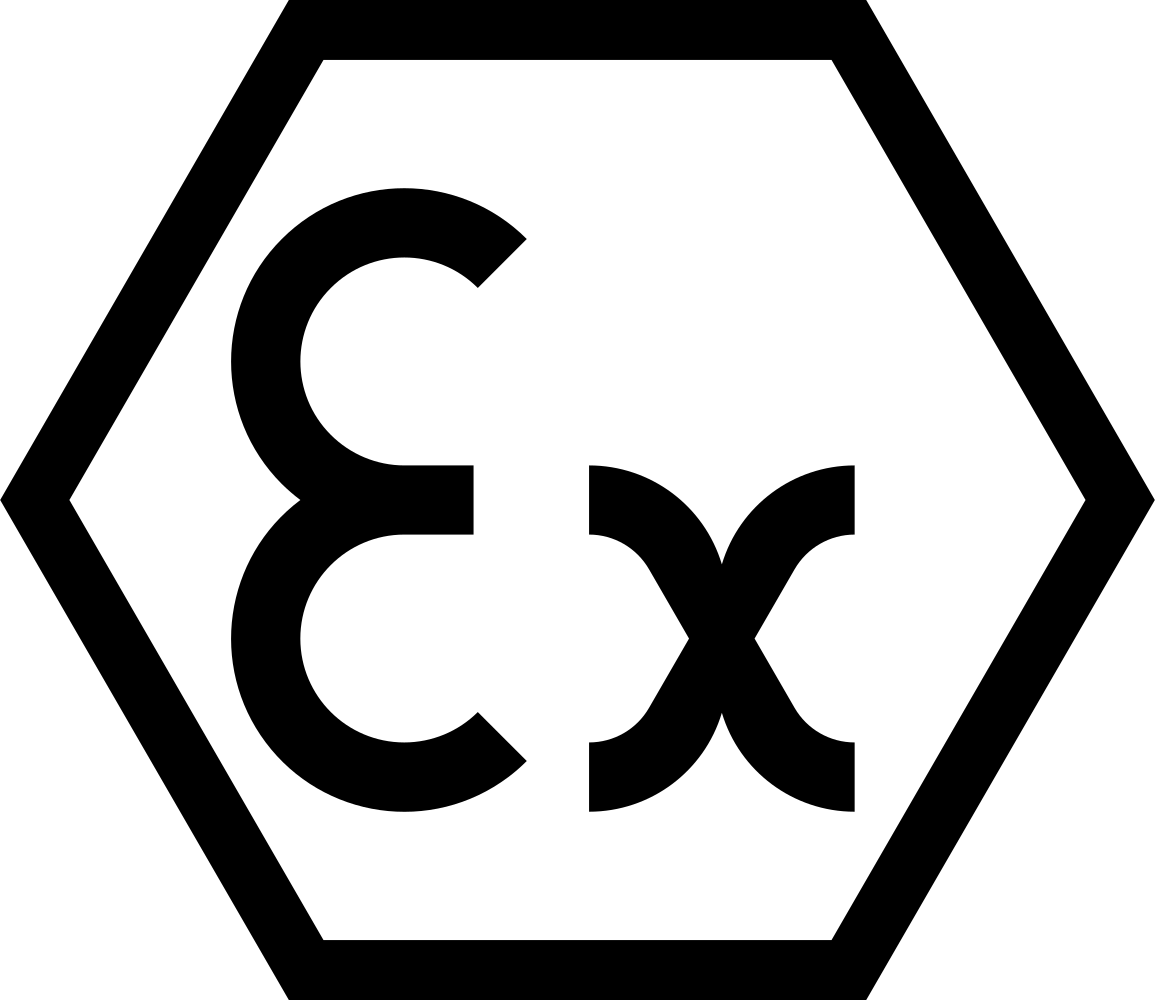

This page answers the questions UAE and GCC engineers ask most before specifying explosion-proof lighting: what ATEX and IECEx actually certify, how zones, gas groups and temperature classes drive product selection, and how to sanity-check a certificate before it goes into a BOQ. Each answer links to the underlying standard or scheme rather than to our own marketing copy - and where the right answer depends on your exact gas, dust or site conditions, we say so.
What ATEX and IECEx actually mean
Q1.What is explosion-proof lighting?+
Explosion-proof lighting is a fixture certified to operate in atmospheres where flammable gas, vapour or dust may be present, without becoming an ignition source. It achieves this through a certified protection method - most commonly a flameproof (Ex d) enclosure that contains any internal spark, or an intrinsically safe (Ex i) circuit that never carries enough energy to ignite the atmosphere. The correct method depends on the zone, gas group and temperature class on site.
Q2.What is ATEX lighting?+
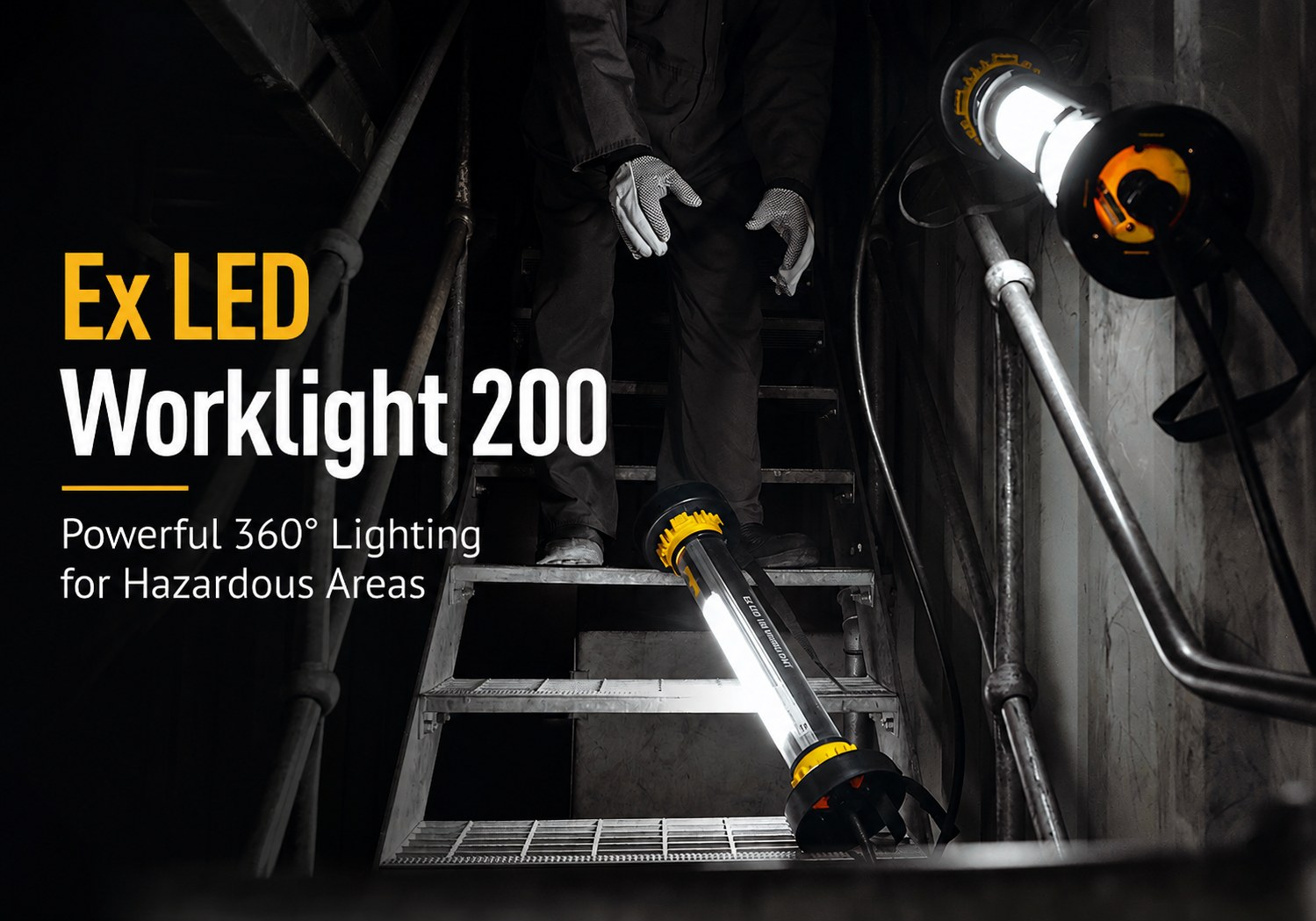
ATEX lighting is a fixture certified under EU Directive 2014/34/EU, tested to the same underlying IEC 60079 standards used internationally, and carrying the Ex mark plus zone, gas group and temperature class ratings on its nameplate. In the UAE/GCC, ATEX-marked fixtures are widely accepted, though IECEx certificates are more commonly requested for project documentation.
Q3.What is IECEx certification?+
IECEx is an international, voluntary certification scheme run by the IEC that verifies equipment for explosive atmospheres against a single set of IEC standards, tested by accredited bodies worldwide. Because the underlying standards match ATEX's, an IECEx Certificate of Conformity is widely accepted across the GCC as project documentation, often reducing the need for duplicate regional testing. Always check the certificate schedule against the exact model ordered.
Q4.What is the difference between ATEX and IECEx?+
ATEX is a legal EU directive - equipment placed on the EU market must carry ATEX/CE marking. IECEx is a voluntary international scheme, built on the same base standards, that most GCC countries accept as sufficient technical evidence without separate local testing. In practice, most hazardous-area lighting sold into the UAE carries both markings; ask for whichever your approved-vendor list names.
Zone 0, 1, 2 - and what belongs in each
Continuous / long-period / frequent
Gas present continuously or most of the time - e.g. inside a tank.
Likely in normal operation
Expected occasionally during normal work - e.g. near a loading point.
Not likely, brief if it occurs
Abnormal condition only - e.g. general plant area around Zone 1.
Caveat: the exact protection concept required is set by the site's hazardous-area classification study and the equipment's certificate - this grid is a shortlisting starting point, not a substitute for that document.
Q5.What are hazardous-area Zones 0, 1, and 2?+
These zones classify how often an explosive gas atmosphere is expected to be present. Zone 0: continuously, for long periods, or frequently. Zone 1: likely during normal operation. Zone 2: not likely during normal operation, and only briefly if it does. Zone classification is set by a site-specific hazardous-area study, not by the product you choose.
Q12.What lighting is suitable for a Zone 1 area?+
Zone 1 fixtures are typically certified Ex d (flameproof), Ex de (flameproof enclosure with increased-safety terminals), or Ex ib (intrinsic safety, single-fault rated). This covers most explosion-proof floodlights, high bays and linear fixtures used in process areas and loading bays. Gas group and temperature class still need to match the specific site atmosphere - the zone alone doesn't determine the fixture.
Q13.What lighting is suitable for a Zone 2 area?+
Zone 2 allows a broader range of certified options because the atmosphere is only present briefly and abnormally: Ex n (non-sparking/restricted breathing), Ex e (increased safety), Ex ic (intrinsic safety, normal-operation rated), and Ex d fixtures are all commonly specified - generally more flexibility on fixture type and cost than Zone 1, though gas group and temperature class requirements still apply in full.
Q16.Do tank farms require hazardous-area lighting?+
Yes, in the areas classified as hazardous by the site's area classification study - typically around vent points, dip/sample hatches, loading arms, and bunded areas where vapour can accumulate. Perimeter roads, control rooms and administration areas may not need explosion-proof fixtures, while lighting on the tank shell, dyke and loading platform usually does. The classification drawing decides this, not the tank farm designation alone.
Gas groups, temperature classes & protection concepts
Q6.Can LED lights be used in hazardous areas?+
Yes - LED is now the dominant light source for explosion-proof fixtures because its lower heat output makes it easier to meet a given temperature class, and it draws less current, simplifying intrinsically safe circuit design for portable equipment. The LED module and driver still sit inside a certified enclosure, so certification applies to the whole fixture, not the LED itself.
Q7.Intrinsically safe vs explosion-proof - what's the difference?+
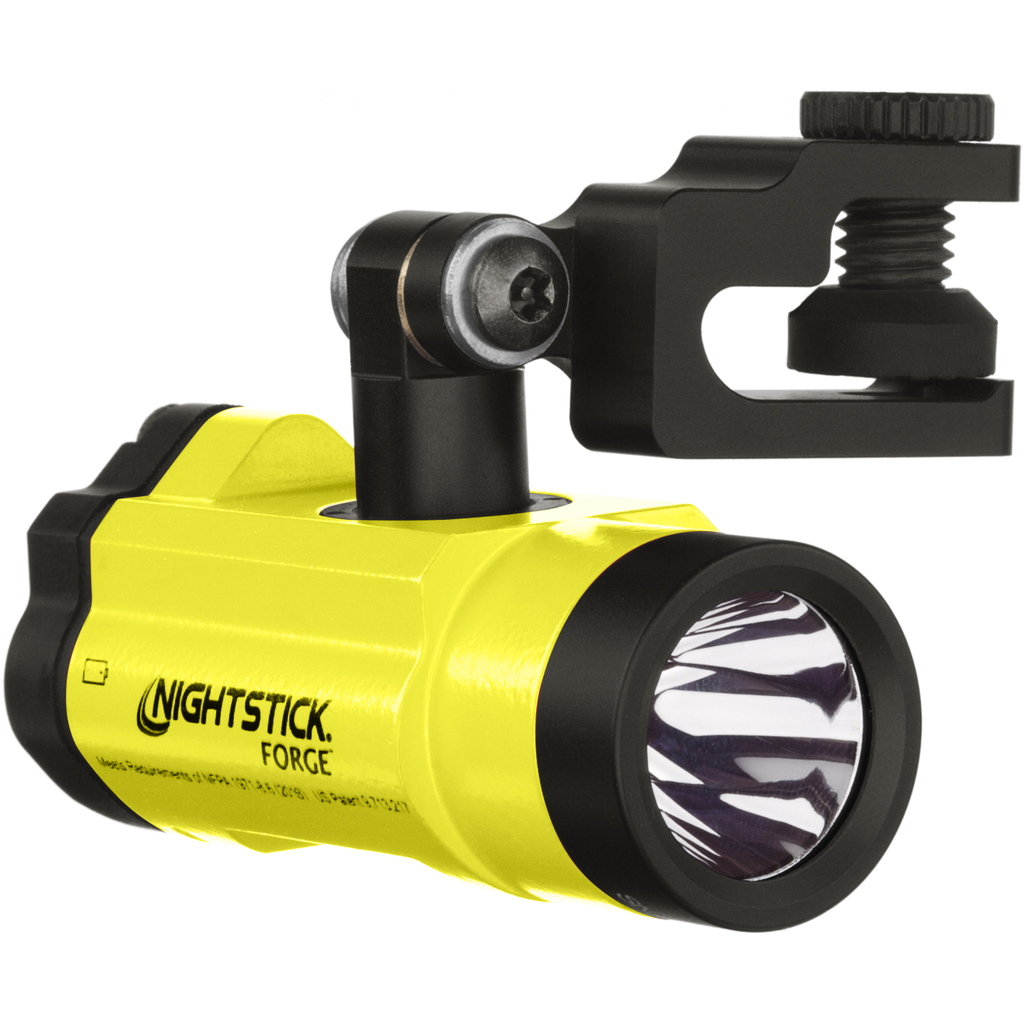
"Explosion-proof" (flameproof, Ex d) equipment is allowed to spark internally - its certified enclosure contains that event so it can't ignite the surrounding atmosphere, which is why these fixtures are heavy and rigid. "Intrinsically safe" (Ex i) equipment limits the circuit's energy so a spark or fault can never carry enough energy to cause ignition - the basis for most portable torches and headlamps, including Zone 0 devices.
Q9.What do gas groups IIA, IIB, and IIC mean?+
Gas groups classify how easily a flammable gas or vapour ignites, based on the maximum experimental safe gap that stops flame transmission between two flanges. Group IIA (e.g. propane) covers most common hydrocarbon vapours. Group IIB (e.g. ethylene) needs a tighter enclosure design. Group IIC (e.g. hydrogen, acetylene) is the most stringent and common on gas-processing sites. IIC-certified equipment is automatically suitable for IIB and IIA duties too.
Q10.What do temperature classes T1 to T6 mean?+
Temperature class states the maximum surface temperature a fixture may reach, so it stays below the auto-ignition point of the gas present: T1 ≤450°C, T2 ≤300°C, T3 ≤200°C, T4 ≤135°C, T5 ≤100°C, T6 ≤85°C. T6 is the most restrictive, typically required for low-ignition-point gases such as carbon disulphide. Most industrial LED explosion-proof lighting is rated T4–T6; confirm the exact figure against your gas's auto-ignition temperature.
Q11.What is the difference between IP66 and IP67?+
Both mean fully dust-tight (first digit 6). The second digit differs: IP66 means protected against powerful water jets from any direction, suiting wash-down areas and exposed outdoor mounting; IP67 means protected against temporary immersion (typically up to 1 m for up to 30 minutes). IP67 isn't automatically "better" - a jet-washed area is better served by a fixture actually tested for that exposure.
Q15.What is Ex d, Ex e, and Ex i protection?+
Ex d (flameproof): a robust enclosure that contains an internal explosion and cools escaping gases so they can't ignite the surrounding atmosphere - internal sparking is allowed. Ex e (increased safety): extra design margins that prevent arcing, sparking or excessive temperature in normal operation - no arcing parts. Ex i (intrinsic safety): the circuit's energy is limited below the ignition threshold even under fault conditions - the basis for most portable and instrumentation equipment.
Choosing a fixture and checking the paperwork
Q8.How do I choose an explosion-proof light?+
Start with five inputs: zone (0/1/2), gas or dust group (IIA/IIB/IIC), temperature class (T1–T6) set by the hottest allowed surface, ingress protection for the environment (splash, wash-down or submersion), and mounting/output needs (lumens, beam angle, voltage). A supplier should shortlist against all five before quoting - if only lumens and price come up, the certification match hasn't been checked yet.
Q14.How do I verify an IECEx certificate?+
Search the free IECEx Certified Equipment online directory by certificate number, manufacturer or product name, and compare the returned certificate schedule against the exact model, variant and options on your nameplate and quotation - a different lens, bracket or driver can sit outside the base certificate. If a supplier can't produce a certificate number that resolves in the directory, treat the compliance claim as unverified.