Introduction
Need portable ATEX lighting for inspection, maintenance, shutdown, emergency response or confined-space work in the UAE or GCC? Daly Middle East supports contractors, HSE teams, maintenance departments, EPC companies and industrial end users with portable hazardous-area lighting options.
This category includes portable torches, handlamps, headlamps, lanterns, work lights and dual-light products for situations where a fixed luminaire is not practical. The correct product depends on the area classification, approval route, battery arrangement, light output, beam, operating time, mounting method and conditions of use.
For broader project support, visit the explosion proof lighting supplier UAE page or request technical lighting support.
What is portable ATEX lighting?
Portable ATEX lighting is mobile lighting equipment designed and assessed for use in specified potentially explosive or hazardous locations. Depending on the product and market, documentation may refer to ATEX, IECEx, intrinsically safe, permissible or hazardous-location approvals. These terms are not interchangeable, so confirm the exact marking and certificate for the model required.
Portable lighting should be selected for the task as well as the zone. A headlamp may be useful when both hands are needed, a lantern can illuminate a nearby work area, and a focused torch may be better for inspection at distance. Rechargeable and battery-powered products also require different charging, storage and operating procedures.
Types of portable hazardous-area lights
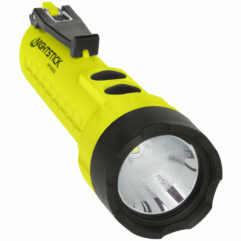
Intrinsically safe flashlights and torches
Handheld flashlights support inspection, route checks, equipment identification and maintenance tasks. Review the approval, lumen output, beam distance, switch arrangement, battery type and operating time before selection.
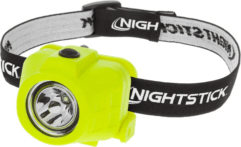
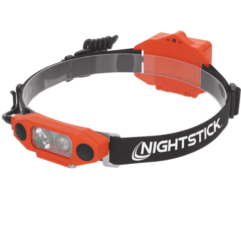
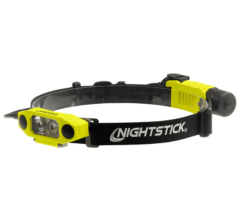
ATEX and intrinsically safe headlamps
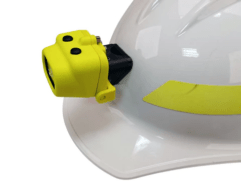
Headlamps keep the operator’s hands free for tools, testing and access work. Confirm the helmet or head strap arrangement, beam modes, tilt position, battery location, charging method and approval for the proposed area.
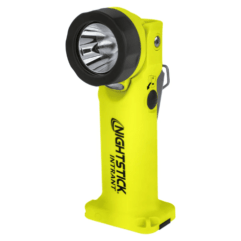
Dual-light handlamps and work lights
Dual-light products may combine a focused beam with a flood or secondary light for close-range work. Check the exact product’s functions, output, battery configuration, beam modes and certification rather than assuming every dual-light product has the same approval.
Rechargeable hazardous-area lanterns
Rechargeable lanterns can provide broader area illumination for temporary work, emergency response and access routes. Confirm the approved charging arrangement, charge time, run time, emergency mode, mounting or hanging method and environmental limits.
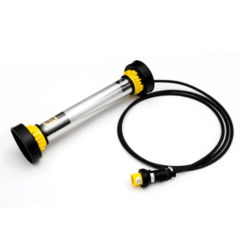
Portable work lights and inspection lights
Portable work lights may be used around machinery, vessels, process equipment, tanks and temporary work areas. Check the product’s mounting method, cable or battery arrangement, impact protection, ingress protection and hazardous-area documentation for the intended task.
Where are portable ATEX lights used?
- Oil and gas inspection, maintenance and shutdown work
- Refineries, petrochemical plants and process facilities
- Offshore platforms, marine terminals and shipyards
- Tank farms, loading areas and fuel-handling locations
- Chemical plants, compressor stations and utility buildings
- Confined-space entry and inspection tasks where the work procedure permits
- Workshops, warehouses and maintenance areas with classified zones
- Emergency response, route checks and temporary work locations
The work permit, area classification, gas testing, isolation procedure and site HSE requirements remain essential. Portable lighting approval does not remove the need to follow the site’s hazardous-area and permit-to-work controls.
How to choose portable ATEX lighting
1. Confirm the area and approval route
Use the approved hazardous-area drawing, work permit or project specification. Confirm whether the location is classified for gas, vapour, mist or combustible dust and whether the requirement is Zone 0, Zone 1, Zone 2, Zone 20, Zone 21 or Zone 22. Check whether the project requires ATEX, IECEx, UL-913, permissible or another approval route.
2. Check the complete product marking
Review the equipment group, category, gas or dust group, protection concept, temperature class, equipment protection level and special conditions of use. “Explosion-proof torch” and “intrinsically safe flashlight” are useful search terms, but the complete product documentation determines suitability.
3. Match the task and beam
Define whether the user needs a focused inspection beam, flood illumination, dual-light output, long beam distance, hands-free operation, area lighting or a warning function. Check lumen output, beam distance, beam modes, colour options and runtime for the intended job.
4. Choose the battery and charging arrangement
Confirm whether the product is disposable-battery, rechargeable or supplied with a dedicated charging system. Review battery type, approved cells, charging location, charge time, operating time, spare-battery requirements and site storage procedures.
5. Review mounting and usability
Check helmet mounting, belt clips, brackets, magnetic bases, hanging hooks, stands, handles, switches and glove operation. The best product is the one that can be safely carried, aimed, secured and maintained during the actual task.
6. Consider the environment
Review ambient temperature, ingress protection, dust, water, salt air, chemicals, vibration, impact, corrosion and cleaning requirements. Portable equipment may be exposed to drops and rough handling, so confirm the published construction and environmental limits.
7. Verify the exact model and documentation
Make sure the datasheet, approval marking and certificate refer to the exact model, variant, battery configuration and accessory arrangement proposed. Availability, lead time and delivery remain subject to the specific quotation and project requirements.
Portable ATEX and IECEx lighting
ATEX and IECEx are related but different certification systems. ATEX is the European Union legal framework for equipment and protective systems intended for potentially explosive atmospheres. IECEx is an international conformity-assessment scheme for equipment and services used in explosive atmospheres.
Some portable products are described as intrinsically safe or carry hazardous-location approvals such as UL-913, while other models may be certified under ATEX, IECEx or another route. Confirm the approval required by the client, consultant, authority and destination market for the exact product.
Read the official IECEx FAQ, the European Commission ATEX guidance and Daly’s portable ATEX lighting guide.
Portable hazardous-area lighting checklist
Before requesting a quotation, send:
- Project location, industry and work task
- Gas or dust zone and area-classification information
- Gas/dust group, temperature class and required approval route
- Product type: torch, headlamp, handlamp, lantern or work light
- Required beam, lumen output, beam distance and operating time
- Battery type, rechargeable requirement and charging arrangements
- Helmet, belt, bracket, stand, hanging or magnetic mounting requirements
- Ambient temperature, dust, water, salt air, chemical and impact conditions
- Quantity, spares, accessories and site storage requirements
- Datasheet, certificate and quotation requirements
If any item is unknown, provide the project specification, work permit or hazardous-area drawing for review. Daly Middle East can then coordinate a reviewable shortlist against the task and site conditions.
Daly Middle East technical support
Daly Middle East supports UAE and GCC enquiries for portable ATEX, IECEx and hazardous-area lighting with application review, product-family guidance, technical information and quotation coordination. Depending on the task, the review may cover the zone, approval route, beam, output, battery, runtime, charging, mounting, environment, accessories, datasheets and certification references.
The objective is a technically reviewable portable-lighting shortlist—not an unsupported claim that every product is suitable for every zone, task or battery arrangement.
Request a portable ATEX lighting quotation or contact Daly Middle East.
Portable ATEX lighting FAQs
What is portable ATEX lighting?
Portable ATEX lighting is mobile lighting equipment intended for specified potentially explosive or hazardous locations. The exact product must match the area classification, approval route, complete marking, battery configuration, environment and task.
What is an intrinsically safe flashlight?
An intrinsically safe flashlight is designed and approved so its electrical and thermal energy stays within specified limits for the permitted hazardous location. Confirm the exact approval and conditions of use for the model before taking it into a classified area.
Can I use a portable light in Zone 0?
Only when the exact product approval and complete marking cover the proposed Zone 0 application and the project or site requirement. Do not infer Zone 0 suitability from the words “ATEX,” “Ex” or “explosion-proof” alone.
Are rechargeable portable ATEX lights safe to charge anywhere?
No. Follow the product instructions, approved charging arrangement and site procedure. Confirm where the battery or light may be charged, stored and transported, and use only the specified cells and accessories.
What information should I send for a portable hazardous-area lighting quotation?
Send the project location, work task, zone, gas or dust group, temperature class, approval route, light type, beam requirement, runtime, battery preference, mounting needs, environmental conditions and any available specification.
Does Daly Middle East supply portable ATEX lights in the UAE and GCC?
Daly Middle East supports UAE and GCC enquiries for portable ATEX, IECEx and hazardous-area lighting options. Product suitability, approval, accessories and availability are reviewed model by model against the project requirement.




![[UL-913] IS Permissible Dual-Light Flashlight](https://daly-me.com/wp-content/uploads/2024/04/31.-UL-913-IS-PERMISSIBLE-DUAL-LIGHT-FLASHLIGHT-XPP-5422G_DownTheBore-1-241x241.jpg)
![[UL-913] IS Permissible Dual-Light Flashlight w/Dual Magnets](https://daly-me.com/wp-content/uploads/2024/04/26.-UL-913-IS-PERMISSIBLE-DUAL-LIGHT-FLASHLIGHT-WDUAL-MAGNETS-XPP-5422GM_DownTheBore-1-241x241.jpg)
![[UL-913] IS Permissible Flashlight](https://daly-me.com/wp-content/uploads/2024/04/57.-UL-913-IS-PERMISSIBLE-FLASHLIGHT-XPP-5420B_DownTheBore-1-241x241.jpg)
![[UL-913] IS Permissible Flashlight](https://daly-me.com/wp-content/uploads/2024/04/50.-UL-913-IS-PERMISSIBLE-FLASHLIGHT-XPP-5420G_DownTheBore-1-241x241.jpg)

![[Zone 0] IS Dual-Light Flashlight](https://daly-me.com/wp-content/uploads/2024/04/34.-ZONE-0-IS-DUAL-LIGHT-FLASHLIGHT-XPP-5422BA_HighAngleTop-1-241x241.jpg)
![[Zone 0] IS Dual-Light Flashlight w/Dual Magnets](https://daly-me.com/wp-content/uploads/2024/04/23.-ZONE-0-IS-DUAL-LIGHT-FLASHLIGHT-WDUAL-MAGNETS-XPP-5422GMA_DownTheBore-1-241x241.jpg)
![[Zone 0] IS Dual-Light Flashlight w/Tail Magnet](https://daly-me.com/wp-content/uploads/2024/04/73.-ZONE-0-IS-DUAL-LIGHT-FLASHLIGHT-WTAIL-MAGNET-XPP-5414GX-1-241x241.jpg)
![[Zone 0] IS Dual-Light Flashlight w/Tail Magnet & Kit](https://daly-me.com/wp-content/uploads/2024/04/75.-ZONE-0-IS-DUAL-LIGHT-FLASHLIGHT-WTAIL-MAGNET-KIT-XPP-5414GX-K01-1-241x241.jpg)
![[Zone 0] IS Dual-Light Torch](https://daly-me.com/wp-content/uploads/2024/04/28.-ZONE-0-IS-DUAL-LIGHT-TORCH-XPP-5422GA_DownTheBore-1-241x241.jpg)
![[Zone 0] IS Dual-Light Torch](https://daly-me.com/wp-content/uploads/2024/04/11.-ZONE-0-IS-DUAL-LIGHT-TORCH-1-241x241.jpg)
![[Zone 0] IS Dual-Light Torch w/Dual Magnets](https://daly-me.com/wp-content/uploads/2024/04/17.-ZONE-0-IS-DUAL-LIGHT-TORCH-WDUAL-MAGNETS-XPP-5422GMXA_DownTheBore-1-241x241.jpg)
![[Zone 0] IS Flashlight](https://daly-me.com/wp-content/uploads/2024/04/42.-ZONE-0-IS-FLASHLIGHT-XPP-5420GX_DownTheBore_3731af11-c058-4e19-8883-6a1922c6ac07-1-241x241.jpg)